The Best Tools for Managing Color Consistency in Textile Production
Getting color right once is one thing. Getting the same color across materials, suppliers, production lots, and locations is the real challenge.
A lot of attention is given to color development and the lab dipping process. It’s important to know the color you’ve selected can be achieved by your supply chain. But what comes next? It’s also important that the selected color can be executed at scale for the life of your product.
So, what tools make color consistency easier to manage?
1. Spectrophotometers: Turn Color Into Data
A spectrophotometer is a device that measures color rather than relying solely on how it appears to the eye. Color becomes objective data rather than someone’s best guess.

People perceive color differently depending on biological and environmental factors, while digital measurement lets teams evaluate spectral data and communicate color numerically. The result is a more objective foundation for evaluating a color against its standard, especially when different teams and suppliers need to hit the same target.
2. Digital Color Standards: One Source of Color Truth
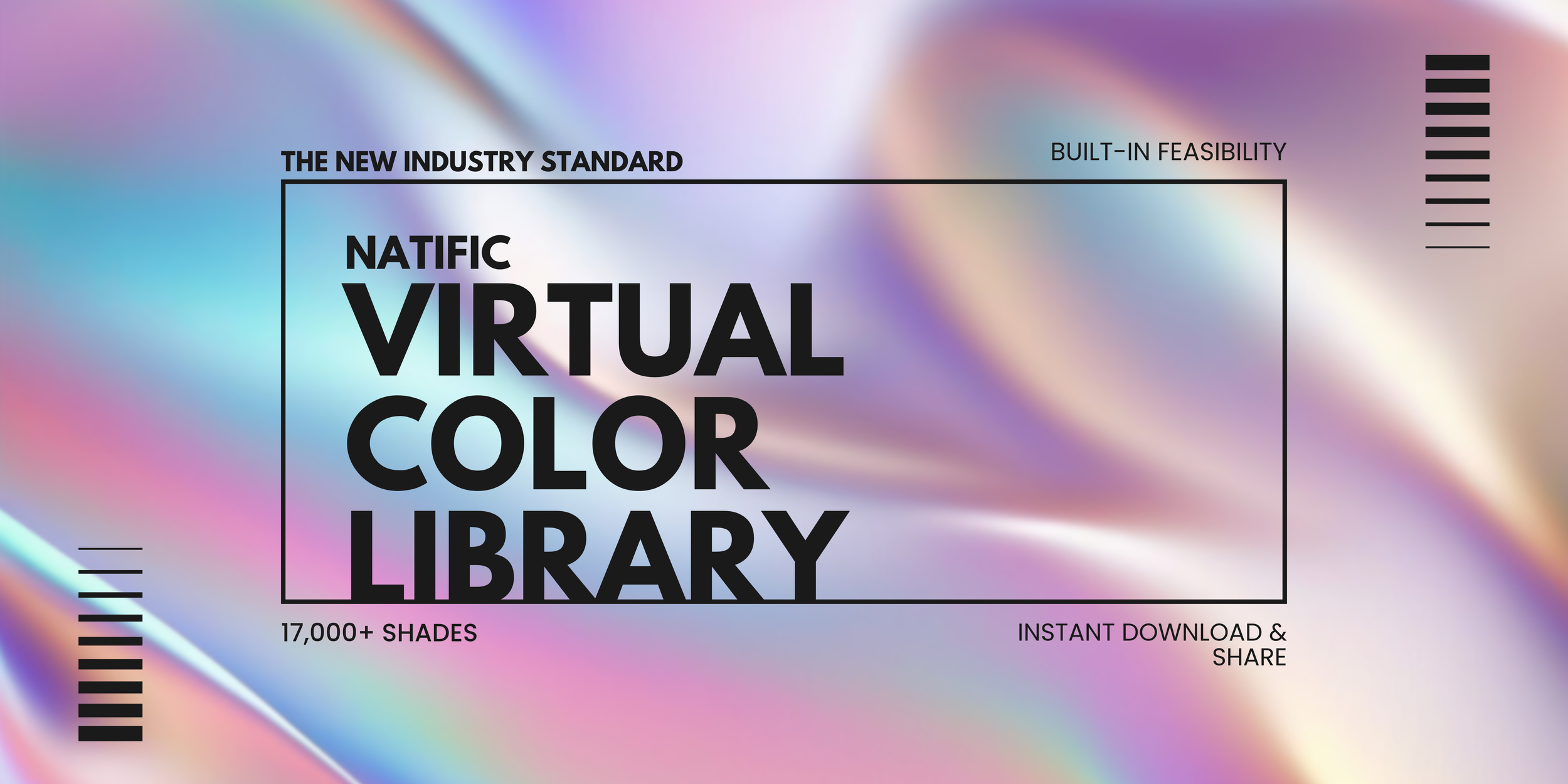
A measurement device is only as useful as the standard you’re measuring against. Physical standards introduce practical challenges: availability, deterioration, repurchasing, and lot-to-lot variation. Virtual standards remove those variables by giving teams access to the same spectral curve. For example, the natific Virtual Color Library (nVCL) provides more than 17,000 shades that have been pre-vetted for feasibility. They are instantly downloadable and shareable.
That means color consistency can start earlier, with designers choosing colors that are achievable for the intended production processes and materials.
3. Color Management Software: Make the Data Actionable
Measurement tells you what happened. Good software helps you decide what to do next.
Digital color software can support evaluation, feasibility assessment, and analyzing color performance data so that teams aren't simply exchanging measurements—they're using that information to achieve consistent, quality results.
This is important for steady production results, as well as for specialized color challenges. Take optically brightened whites: they require proper UV calibration spectro settings and evaluation that accounts for fluorescence and intrinsic shade. natific has developed multiple whiteness indices that are incorporated into all our software to improve the accuracy and precision of white shades.
The Best Tool Is Really a Connected Workflow
The right equipment combined with the right tools and the right knowledge in place.

The strongest approach combines accurate measurement, reliable digital standards, and software that turns color data into repeatable decisions—then gets brands and suppliers working from that same digital process. Add a well-trained supply chain, and that’s where consistency becomes scalable.
Want to see where digital tools could strengthen your color workflow? Ask natific by sending us a note in the form below.